
Steel vs timber framing: which is right for your build?
Both materials can produce safe, durable, comfortable buildings. A fair, factor-by-factor comparison to help you weigh the trade-offs for your New Zealand project — beyond “which one is stronger?”
Last reviewed:
10 min readSteel and timber can both meet New Zealand requirements when they’re designed and installed correctly. The better choice depends on the project, the site, the construction team and what you value most — and the lowest frame price doesn’t always produce the lowest completed cost.
Steel vs timber at a glance
| Factor | Light gauge steel | Timber |
|---|---|---|
| Dimensional stability | Roll-formed to exact size; doesn’t absorb moisture, so it won’t shrink, bow or twist after installation. | Graded and treated, but individual pieces vary and can move as moisture content changes. |
| Pests and rot | Inorganic: nothing for borer or termites to eat, and it can’t rot. | Resistance to borer and decay depends on treatment and on keeping moisture under control. |
| Combustibility | Non-combustible. Fire resistance still comes from the whole designed assembly. | Combustible. Fire resistance likewise comes from the whole assembly (linings, detailing). |
| Thermal behaviour | Conducts heat, so thermal breaks or continuous insulation are needed to manage bridging. | Lower conductivity through the studs, though studs still interrupt cavity insulation. |
| Weight and handling | High strength-to-weight; light members are quick to lift, position and fix. | Heavier for an equivalent member. |
| Precision and waste | Cut to length and labelled in the factory from approved drawings; very little site waste. | Usually measured and cut on site, with more offcuts. Prefabricated timber narrows this gap. |
| Build and trades | Labelled, made-to-measure components; builders who can read drawings can assemble standard framing. | Familiar to every NZ builder and easy to modify on site. |
| Sustainability | Highly recyclable, no treatment chemicals, low framing waste. | Renewable and stores carbon, but treatment chemicals and offcuts complicate end of life. |
| Cost | Framing line can be higher; judge it on the whole build, including waste, rework and programme. | Often cheaper on the framing line; total cost depends on labour, waste and rework. |
General guidance only. Actual performance depends on the full building design, specification, site conditions and workmanship. The sections below explain each factor.
Accuracy and straightness
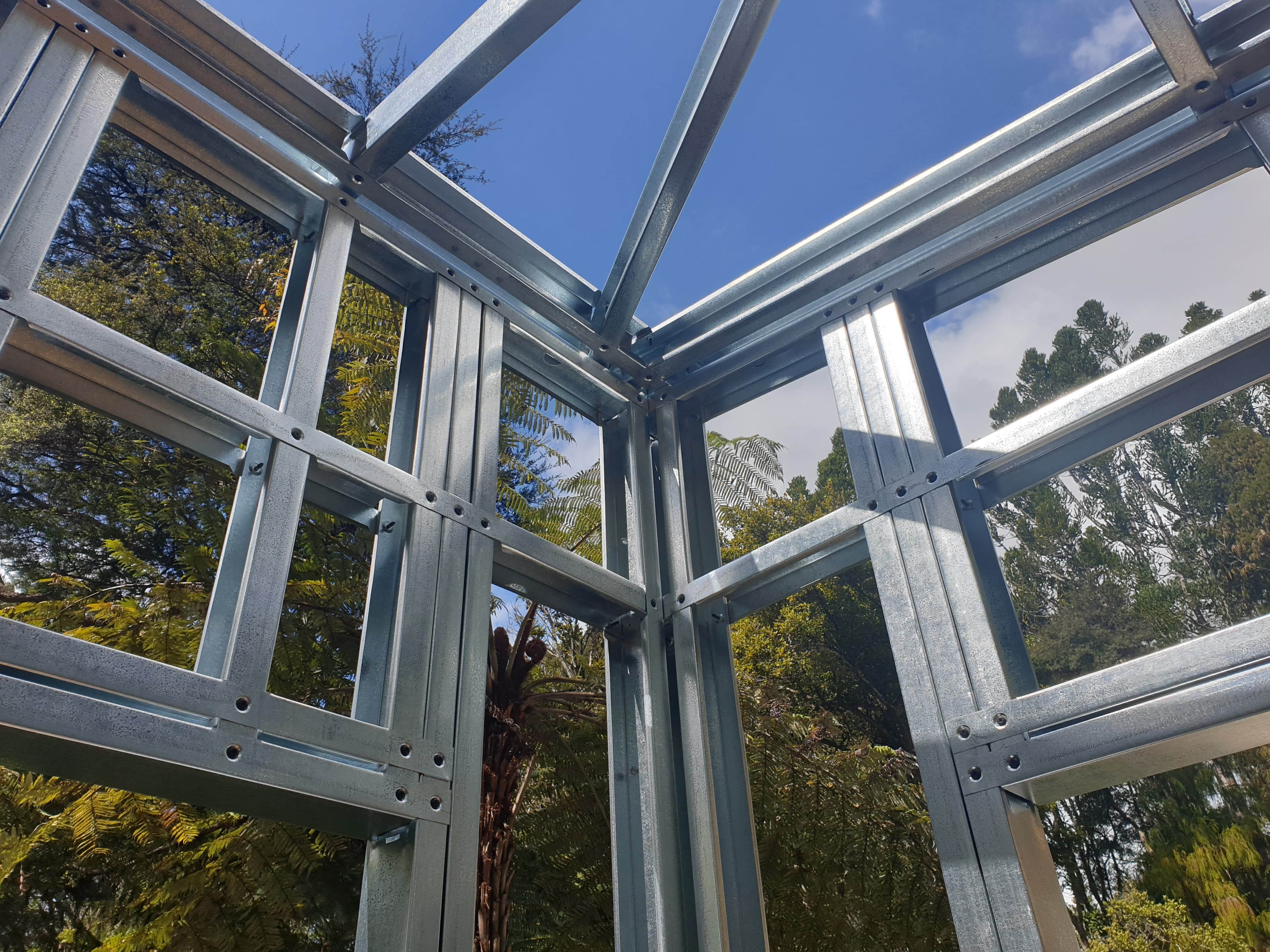
This is one of steel’s clearest practical advantages. Light gauge steel members are manufactured to defined dimensions and don’t absorb moisture, so they won’t dry, shrink, twist or warp after installation. That helps maintain straight walls, consistent roof lines and reliable fixing surfaces.
Timber is a natural material. Grading and treatment control performance, but individual pieces can still vary, and moisture changes can cause movement — particularly if framing is enclosed before it reaches an appropriate condition.
Structural performance
Both systems can comply. Steel has a high strength-to-weight ratio; timber has well-established design methods and a long history here. Neither is automatically stronger in every building — performance depends on member sizes and spacing, bracing and hold-downs, connections, spans, building shape, design loads and workmanship.
A well-designed timber frame can outperform a poorly detailed steel frame, and the reverse is also true.
Speed and cost
Steel can reduce work at the framing stage because components are made before delivery. But timber can be prefabricated too, so the real comparison is often factory-manufactured framing versus site fabrication, not simply steel versus timber.
There’s no honest universal answer on price. Framing is only part of the completed cost. A meaningful comparison includes design, supply, assembly, freight and lifting, on-site labour, the required thermal system, rework, programme and downstream trade efficiency.
“Compare the total installed scope and project risk — not only the price per metre or tonne.”
Thermal performance
Timber has lower thermal conductivity through the studs, though it still interrupts cavity insulation. Steel conducts heat readily, so repeating studs can create more significant thermal bridges if a wall relies only on insulation between the framing.
A steel-framed building can still achieve excellent energy performance — but the design may need continuous insulation outside the framing, a verified thermal break, deeper cavities or careful junction detailing. MBIE’s guidance for steel frame construction emphasises that insulation is critical and that a continuous external layer reduces heat transfer.
Moisture, fire and durability
Steel doesn’t rot and isn’t food for borer or termites, and it won’t swell or shrink from absorbed water. It is also non-combustible. But neither claim makes a building immune to problems: water can still damage linings, insulation and finishes, and required fire resistance comes from the whole tested or designed assembly — not the framing material alone. Don’t market either system as “fireproof”.
A common worry is that steel framing rusts. Framing steel is coated to resist corrosion and sits dry inside a lined wall; the coating should suit the site, which matters most in coastal and geothermal zones. More in does steel framing rust?
The verdict: steel or timber?
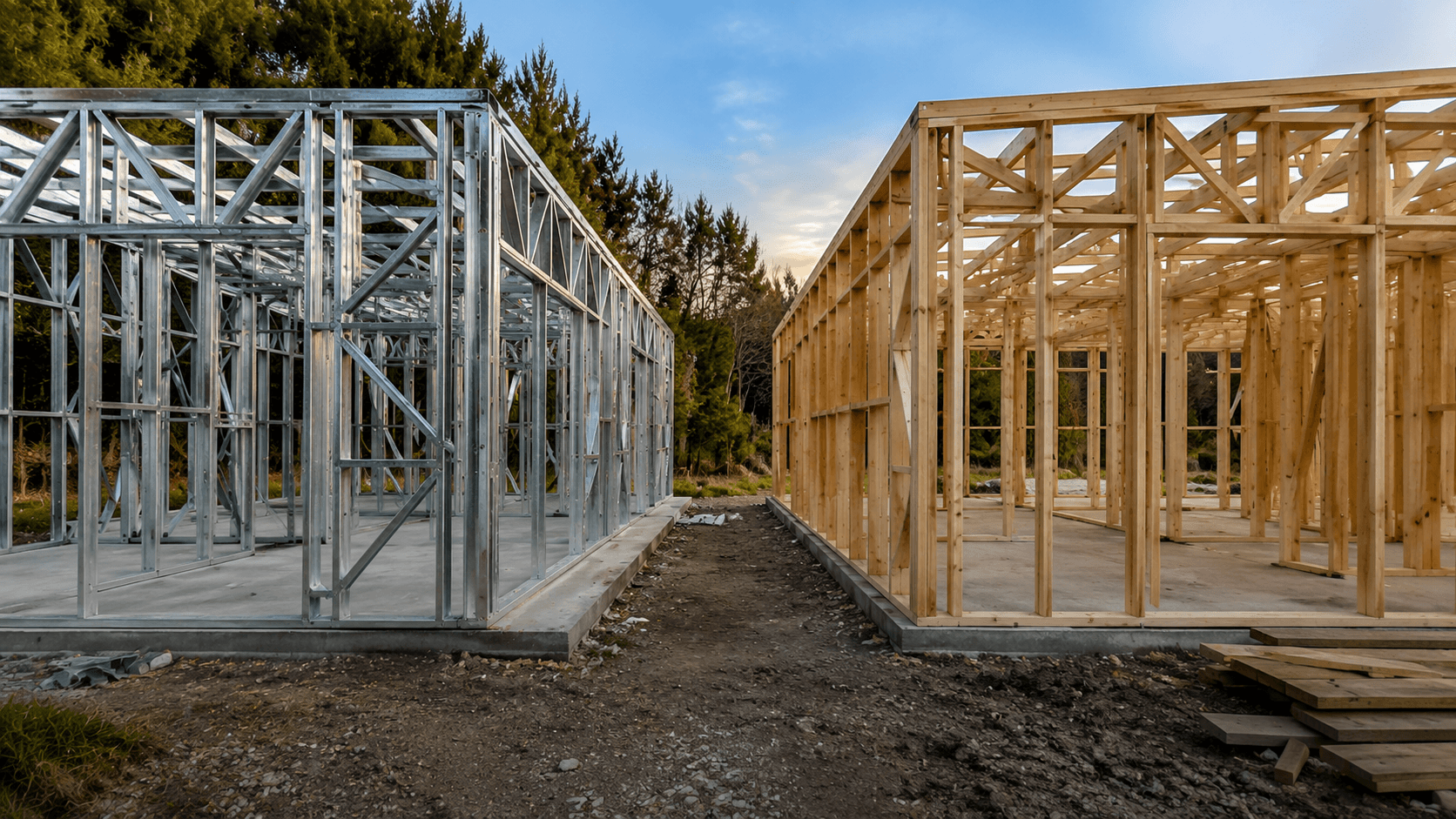
There’s no single winner. Steel’s strongest case is precision and predictability; timber’s is familiarity and ease of site modification. For a new home, kitset or addition with a well-resolved design, steel can provide a highly controlled framing package. For a heavily improvised renovation with uncertain dimensions, timber’s flexibility may be valuable.
Steel tends to suit
- Straight walls and finishes that stay true: fewer nail pops, cracked linings and sticking doors as the frame ages.
- Long spans and open-plan designs that reward a high strength-to-weight ratio.
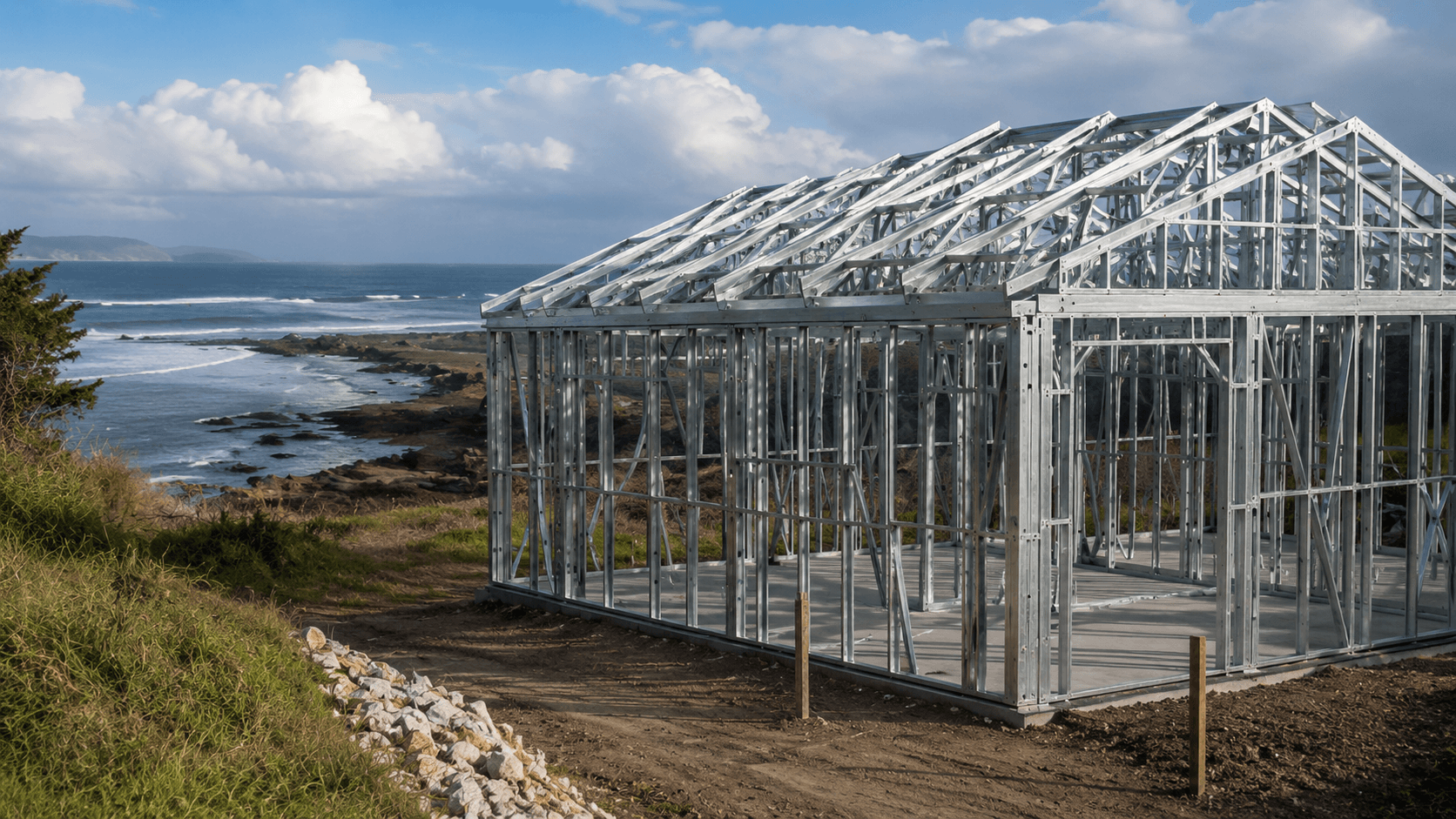
- Coastal, humid or pest-prone sites where rot and borer are a real concern.
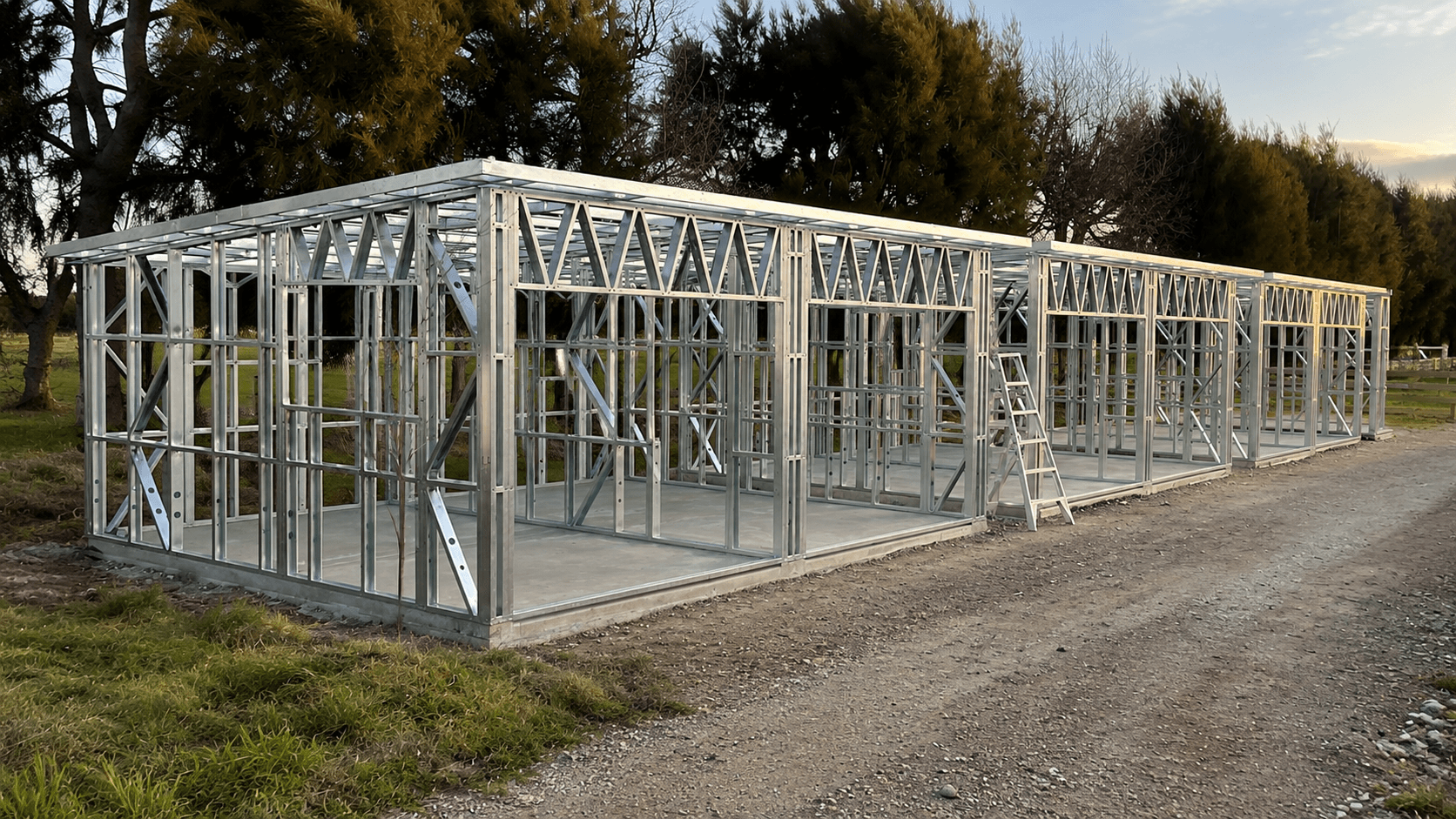
- Kitset and prefabricated builds that reward factory precision and low site waste.
Timber tends to suit
- Renovations with uncertain existing dimensions that need cutting and adjusting on site.
- Projects where the lowest framing-line price is the deciding factor.
- Teams that have only framed in timber and want to stay with familiar methods.
The right decision comes from comparing the complete installed system. New to the material? Start with what light gauge steel framing is.
Questions to ask before you choose
- What are your site conditions? Coastal exposure, humidity and pests are where steel’s rot- and borer-proof frame pulls ahead.
- What does the design ask for? Long spans, straight lines and open-plan layouts play to steel’s strengths.
- What matters most: cost, speed or durability? Weigh the upfront framing price against waste, programme and long-term maintenance.
- Who is building it? Any builder who can read drawings can assemble labelled, made-to-measure steel frames; timber suits crews who want to cut and adapt on site.
- What are your sustainability goals? Steel is highly recyclable with no treatment chemicals; timber is renewable and stores carbon.
Frequently asked questions
Is steel framing better than timber framing?
Neither is better for every build. Light gauge steel stays straight, won't rot or feed borer, is non-combustible and arrives cut and labelled with little waste. Timber is familiar, easy to modify on site and can suit tight framing budgets. Compare the complete installed system for your project rather than the material alone.
Is steel framing more expensive than timber?
Timber often wins the framing line on the first quote, but steel is best judged on the whole build. A frame that stays straight and never rots means less waste, less rework and fewer call-backs, which can offset a higher upfront price. Compare full project costs rather than framing material in isolation.
Does steel framing cause condensation or thermal bridging?
Steel conducts heat more readily than timber, so thermal breaks and continuous insulation are used to manage bridging and condensation risk. That is standard detailing on a modern steel build. Thermal comfort is set by the whole envelope, not the frame alone, and a well-detailed steel home is every bit as warm.
Does steel framing rust?
Framing steel is coated to resist corrosion and sits dry inside a lined wall, away from the weather. The coating should suit the site, which matters most in coastal and geothermal zones. With the right coating, a steel frame is built to last the life of the building.
Can I mix steel and timber framing in one build?
Yes, hybrid construction is common. Many builds use steel framing where its straightness, spans and durability matter most and timber elsewhere. The approach should follow the project design and any engineering requirements.
Is steel framing harder to build with than timber?
No. Any builder who can read construction drawings can assemble labelled, made-to-measure steel frames using the supplied plans and fixing details, without a specialist trade for standard framing work.
Comparing steel and timber?
Send us your drawings and we’ll compare the real, complete framing scope — not a generic steel-versus-timber estimate.