
Construction and demolition waste is a major New Zealand problem — a 2023 BRANZ review described it as roughly 40% of landfill waste, and a 2025 Ministry for the Environment baseline noted earlier estimates nearer 50% while warning that national data is still incomplete. The exact figure matters less than the commercial reality: sites pay for material that’s ordered, transported, handled and then discarded.
Where framing waste comes from
Waste isn’t just offcuts. It comes from ordering excess as a safety margin, cutting standard lengths into small pieces, inaccurate measurements, design changes after materials arrive, damaged stock, poor weather protection, rework and mixed waste bins. Traditional site fabrication makes many of these losses hard to see.
Digital design creates a defined bill of materials
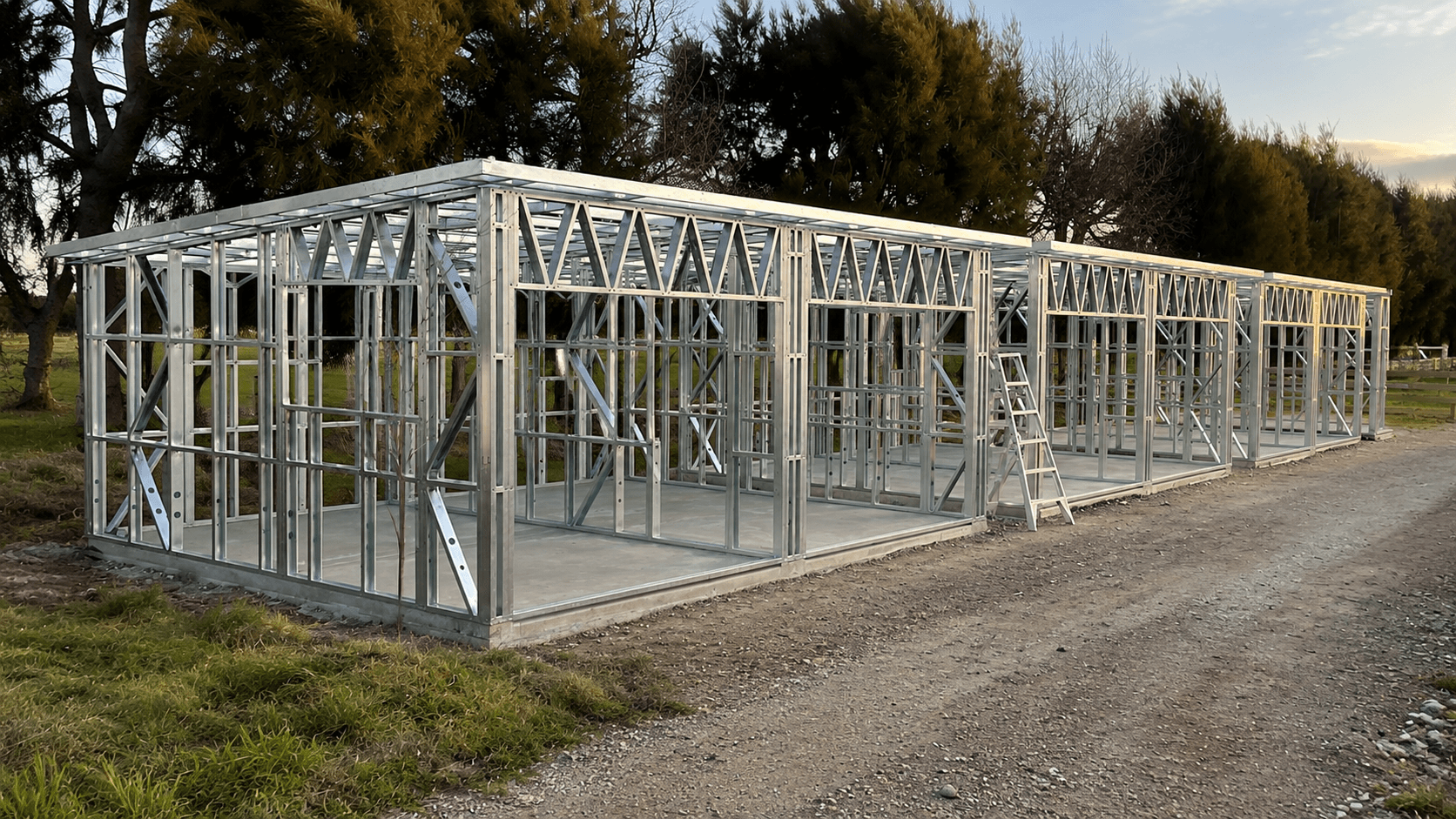
A light gauge steel frame is modelled before manufacture, so the software identifies the members required for each panel, truss and floor component. That’s a more exact requirement than ordering broad stock and deciding every cut on site — and it makes discrepancies visible before production. The greatest reduction comes when the design is genuinely complete; if the project keeps changing after manufacture, precision becomes rework.
Members are cut to length in the factory
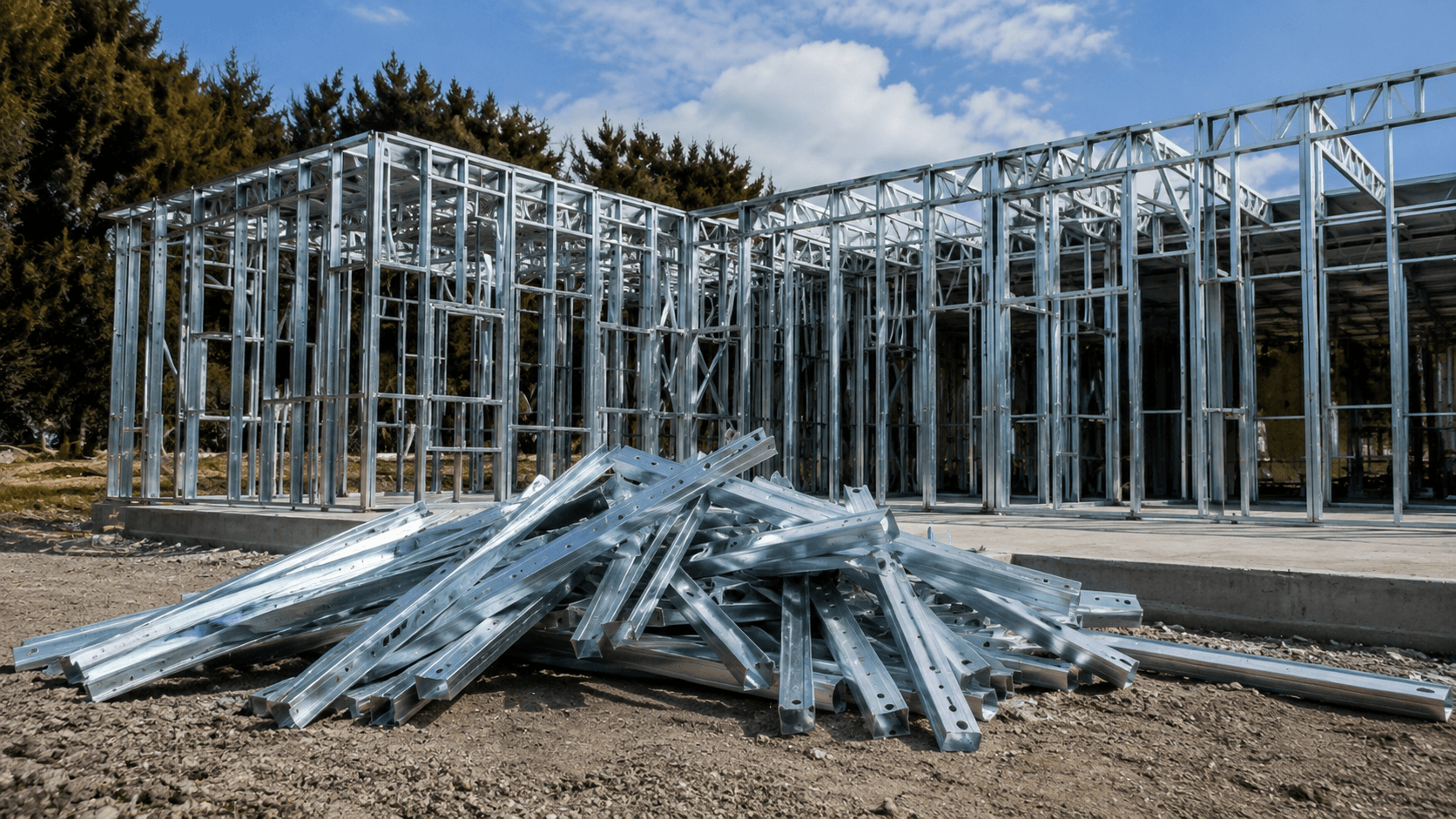
Steel coil is roll-formed into each specified member, cut to length with service holes and marks added. The builder receives the parts the frame needs, not long stock to trim — reducing end cuts, incorrect cuts, duplicated pieces and lost material. Manufacturing scrap still exists, but it’s concentrated in one place where it can be measured and managed.
“Digitally manufactured steel framing can improve material efficiency, reduce framing offcuts on site and create a clean recycling stream for steel scrap.”
Prefabrication, service holes and recyclable offcuts
Frames supplied as panels or numbered flat-pack members move more cutting into a controlled environment, keep the framing stage tidy, and make it easier to separate waste streams. Pre-formed service holes cut down ad hoc drilling, and steel offcuts have established scrap value — factory scrap is easier to keep clean and separate than mixed site waste. Dimensional stability also prevents downstream rework from distorted framing, which can be more valuable than a small reduction in offcuts.
What steel framing doesn’t solve
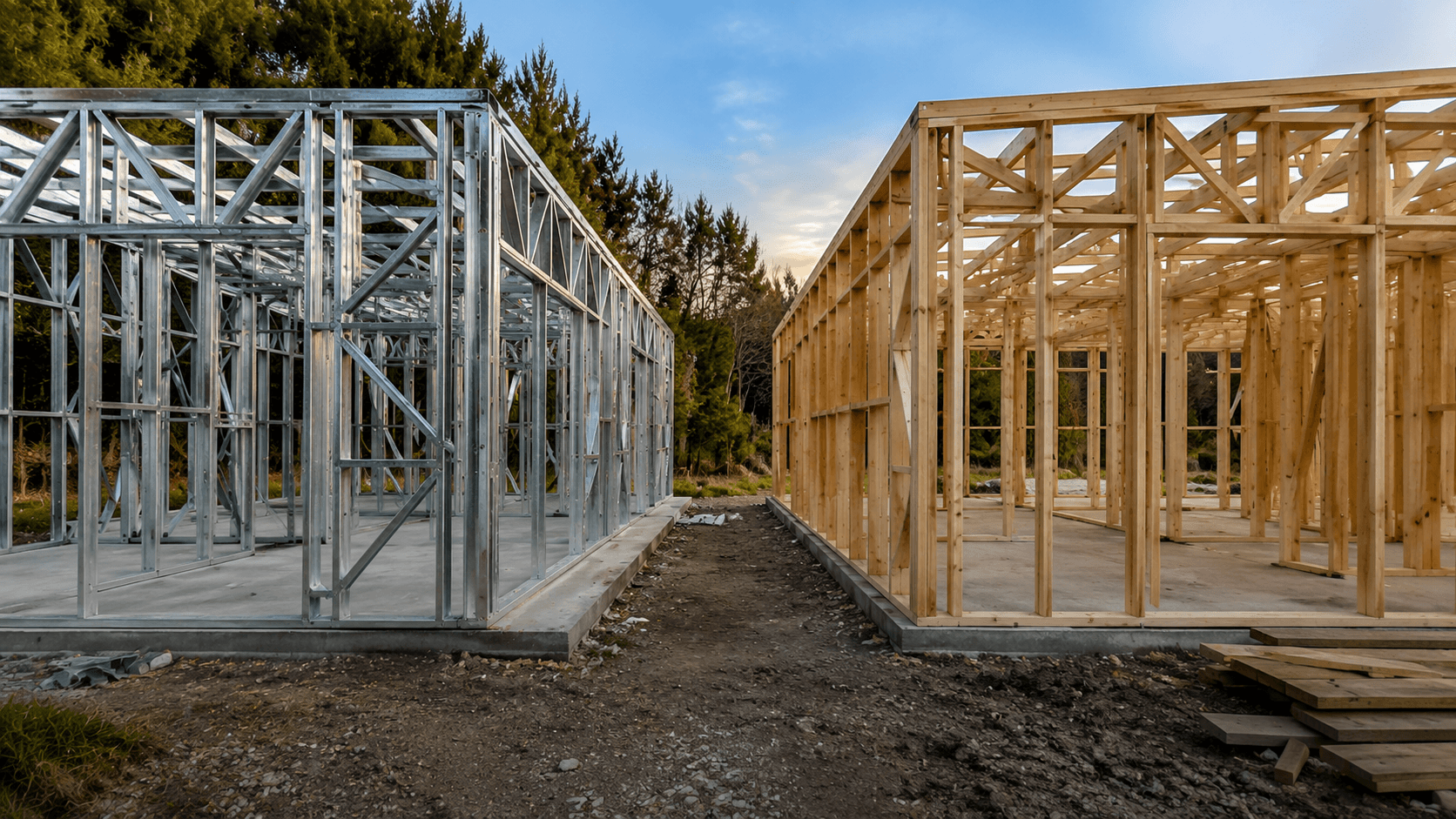
A frame is only one part of the building. Waste still comes from concrete, cladding, plasterboard, insulation, packaging, finishes and demolition. Steelmaking also carries substantial embodied emissions, so recyclability and low site waste shouldn’t be used to claim steel is automatically the lowest-carbon option for every project. Whole-building life-cycle performance matters more than a single attribute — see our steel vs timber comparison.
How to get the lowest-waste result
- Freeze the design before manufacture. Late changes are the enemy of prefabrication.
- Coordinate foundations and set-out. Accurate framing can’t compensate for a slab built to different dimensions.
- Decide the delivery sequence. Pack bundles in installation order to reduce double handling.
- Protect components and separate recycling. Keep steel clear of pooled water and free of general rubbish so it stays recoverable.
Want a leaner framing package?
We manufacture steel frames from coordinated digital designs and supply panelised or flat-pack systems to suit your project and delivery location.